Slopes That Hold Through Every Storm
Erosion Control in weatherford and surrounding areas for properties losing soil to runoff and slope failure
BM Dirt Work handles erosion control by addressing how water moves across your land and where soil is being displaced. When rain hits unprotected slopes or concentrated runoff flows across bare ground, soil migrates downhill, exposing roots, undercutting driveways, and creating channels that worsen with each weather event. You'll notice soil piled at the base of slopes, exposed tree roots higher on the grade, or ruts forming where water repeatedly flows.
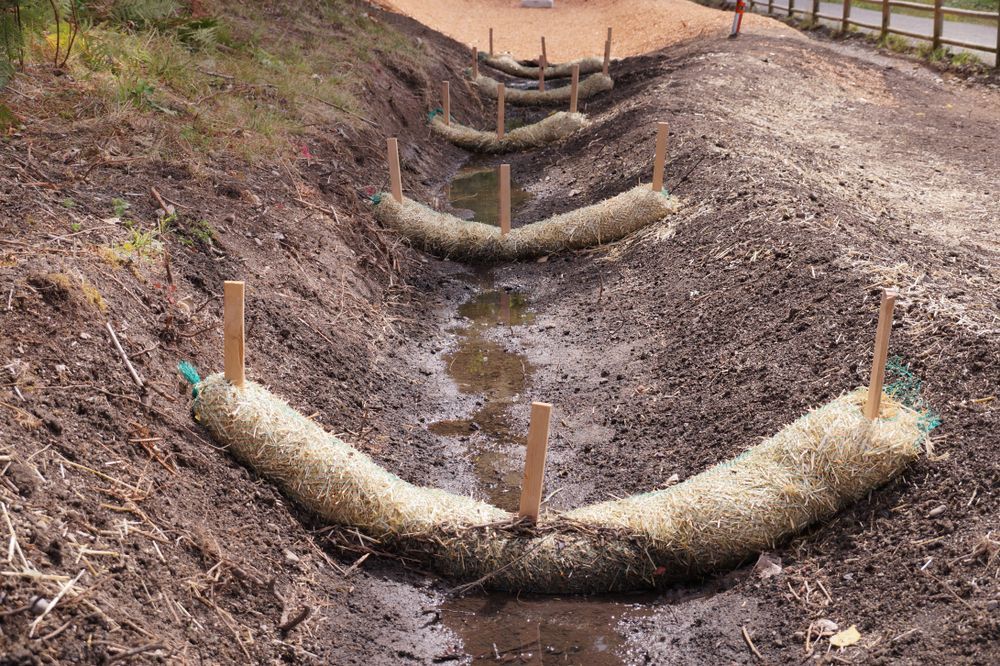
Erosion control involves redirecting water flow through grading adjustments and stabilizing vulnerable soil with structural and vegetative solutions. The work integrates with drainage systems to prevent concentrated runoff from carving channels, while slope modifications reduce water velocity and give soil a chance to absorb rather than migrate. Problem areas typically include slopes steeper than three-to-one ratios, locations where downspouts or hardscape concentrate water, and any exposed soil subjected to repeated flow.
Request a site evaluation to identify where water is removing soil and what adjustments will prevent further loss in Weatherford, Springtown, Jacksboro, and neighboring communities.
What Proper Erosion Control Requires
Effective erosion control begins with understanding where water enters your property, how it flows across the surface, and where it exits. The grading is adjusted to slow water velocity on slopes and redirect flow away from vulnerable areas, while drainage pathways are established to handle runoff without allowing it to concentrate and cut into the soil. Each site requires a different combination of slope modification, surface stabilization, and drainage integration depending on soil type, slope angle, and rainfall intensity.
After the work is complete, you'll see water dispersing across stable surfaces instead of forming channels, soil remaining in place through heavy rain, and vegetation establishing on slopes that previously eroded bare. Driveways and foundation perimeters stay intact without the undermining that occurs when runoff removes supporting soil. BM Dirt Work ensures grading transitions are gradual enough to prevent new erosion points while maintaining the drainage capacity needed to handle storm events.
The solution may include rock-lined channels for concentrated flow areas, compacted soil transitions to tie new grades into existing elevations, and surface treatments that allow vegetation to establish before the next heavy rain. Some properties require subsurface drainage to intercept groundwater before it surfaces on slopes, while others need only grade reshaping to eliminate the conditions causing soil loss.
These questions come up when property owners are dealing with slopes losing soil or runoff creating damage patterns.
What Property Owners Usually Ask
What causes erosion to start in areas that were previously stable?
Erosion often begins when vegetation dies, grading settles, or water flow patterns change due to new construction or hardscape additions. Once soil is exposed and a channel forms, each rain event deepens the problem because water follows the path of least resistance.
How does erosion control work with existing landscaping?
The grading adjustments and drainage installations are designed to preserve established plants whenever possible, using strategic placement of rock, berms, and channels to redirect water without removing healthy vegetation that already provides root stabilization.
Why does rock get used in some erosion control systems?
Rock resists displacement from water flow, so it's placed in areas where velocity is too high for soil or vegetation to remain stable. It lines drainage channels, protects slope toes, and creates transitions between different grades without eroding.
When should erosion control be done relative to other site work?
Erosion control is most effective when completed before seasonal rains begin, giving any seeded areas time to establish and allowing compacted surfaces to settle. It's often coordinated with grading, drainage, and clearing work to address the full water management system at once.
What determines whether a slope needs regrading or just surface treatment?
Slope angle, soil type, and water volume determine the approach. Slopes steeper than three-to-one usually need regrading to reduce velocity, while gentler slopes may only require surface stabilization if water volume is manageable and the soil has adequate cohesion.
BM Dirt Work evaluates how water is currently moving across your property and what changes will keep soil in place through future storms. Schedule an assessment to review slope conditions and drainage patterns before the next heavy rain season.